

In this report
Making Your Home Healthier Starts With Better Water and Air
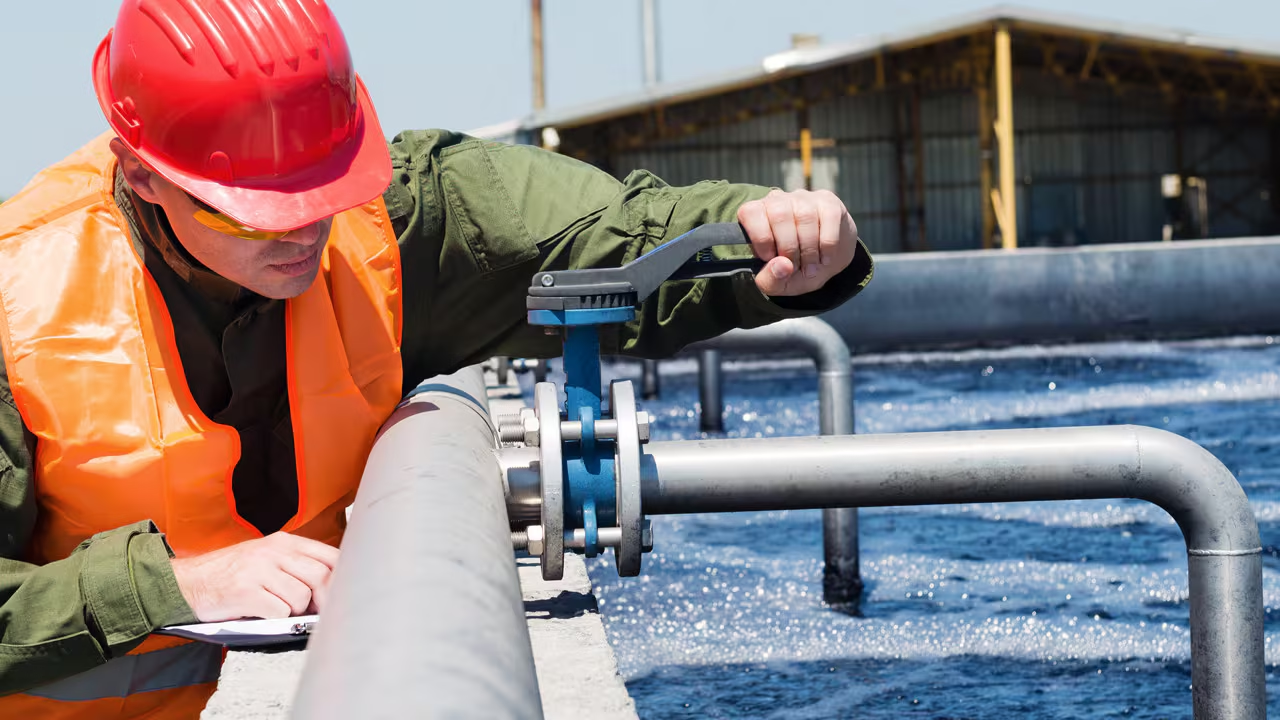
A comfortable home isn’t just about nice furniture, fresh paint, or a kitchen that looks good in photos. Some of the things that make a house genuinely pleasant are much less visible. Clean water. Fresh indoor air. Equipment that works quietly in the background without making you think about it. Most people don’t spend much…
A comfortable home isn’t just about nice furniture, fresh paint, or a kitchen that looks good in photos. Some of the things that make a house genuinely pleasant are much less visible. Clean water. Fresh indoor air. Equipment that works quietly in the background without making you think about it.
Most people don’t spend much time wondering about what’s flowing from their taps or circulating through their rooms. And honestly, that’s understandable. Life is busy enough. But when water starts tasting strange, dust seems to return five minutes after cleaning, or an appliance begins behaving oddly, those hidden systems suddenly become very noticeable.
Taking care of them doesn’t have to be complicated. The trick is understanding what your home actually needs and giving those systems sensible attention over time.
Water and Air Are More Connected to Comfort Than You Think
We often treat water and air as completely separate parts of home maintenance. In reality, both have a direct effect on everyday comfort.
Water quality can influence everything from drinking and cooking to showers and laundry. Hard water may leave mineral deposits on fixtures, while certain contaminants can affect taste or odor. Indoor air has its own challenges, including dust, allergens, humidity, odors, and particles brought in from outdoors.
Neither situation necessarily calls for an expensive, high-tech solution.
Sometimes the answer is surprisingly simple. A filter may need changing. A ventilation issue may need attention. A water system might need cleaning or adjustment. Good home care is often less about buying more equipment and more about keeping the equipment you already have in decent shape.
Don’t Ignore the Early Warning Signs
Homes have a funny way of giving us clues before something completely breaks.
A faucet may develop lower-than-normal pressure. An air purifier might start running constantly. You may notice an unusual odor or a thin layer of residue around fixtures. Perhaps a system that used to be nearly silent has developed a strange hum.
These little changes are easy to dismiss. After all, the water still runs and the air conditioner still turns on.
But small changes can sometimes point to developing problems. Catching them early may mean a straightforward service visit instead of an emergency repair at the worst possible time.
There’s no need to become paranoid about every unusual noise, either. Just pay attention. You know what your home normally sounds, smells, and feels like.
Choosing Equipment Should Start With the Problem
It’s tempting to shop for home treatment equipment by looking at impressive specifications. More stages, bigger capacity, newer technology — it all sounds convincing.
But the better question is: what are you actually trying to solve?
If hard water is the concern, a softening system may be appropriate. If you’re primarily worried about taste and odor, another type of filtration may make more sense. For indoor air, the right equipment depends on whether you’re trying to address particles, odors, humidity, or another specific concern.
Testing can be extremely helpful here.
Instead of guessing, homeowners can identify the issue and choose equipment designed for that particular need. It can save money, too. There’s little value in installing a complicated system that doesn’t address the problem you’re experiencing.
Professional Installation Matters More Than It Seems
Even good equipment can perform poorly when it’s installed incorrectly. That’s why installation deserves more attention than it usually gets.
Water treatment equipment may need appropriate plumbing connections, drainage, pressure considerations, and adequate space. Air treatment equipment has its own requirements involving airflow, electrical connections, placement, and ventilation.
A rushed installation can create problems that look like equipment failures later.
Professional installers also know the small practical details that don’t always appear in a product brochure. They can identify awkward connections, recommend sensible placement, and make sure the system is configured for the home rather than simply switched on and left there.
That’s worth paying for.
Maintenance Is the Part Nobody Gets Excited About
Let’s be honest: maintenance isn’t glamorous.
Nobody wakes up on Saturday morning thinking, “Wonderful, today I get to inspect my filtration system.”
Still, maintenance is what keeps many home systems from slowly becoming less effective. Filters have limited lifespans. Components wear out. Connections may loosen. Dust can collect where it shouldn’t.
A maintenance schedule doesn’t need to be complicated. Follow the manufacturer’s recommendations, keep track of filter changes, and arrange periodic professional inspections when appropriate.
For larger or more complex systems, regular servicing becomes even more useful. It provides an opportunity to spot wear before it turns into a breakdown.
And if you’re unsure how often something needs attention, ask. A good technician should be able to explain it without burying you in technical jargon.
Don’t Forget About Indoor Air
People are generally more aware of outdoor pollution than indoor air quality, but the air inside a home can contain its own mixture of dust, odors, pet dander, cleaning-product residues, and other particles.
Cooking, showering, burning candles, using certain household products, and simply living in a sealed-up home can all influence indoor conditions.
Ventilation matters. So does humidity.
An air purifier can be useful, but it shouldn’t be viewed as the solution to every indoor air problem. Cleaning regularly, maintaining HVAC filters, controlling moisture, and bringing in fresh air when appropriate are important parts of the bigger picture.
Think of air quality as a household habit, not just a piece of equipment.
Look at the Long-Term Picture
When homeowners compare treatment systems, the purchase price naturally gets attention. That’s reasonable, but it’s only one part of the cost.
Consider replacement filters, electricity or water consumption, maintenance, repairs, and expected equipment lifespan. A system that costs slightly more upfront may be easier and cheaper to maintain over several years.
Ask about warranties, too. Find out what’s covered and for how long. If replacement parts are required, check whether they’re readily available.
These aren’t exciting questions, admittedly. But they can save considerable hassle later.
A Home Works Best When Its Systems Work Together
The most comfortable homes aren’t necessarily packed with the latest gadgets. They’re homes where the basics are working properly.
Water treatment, filtration, ventilation, and air purification all have different jobs, and the best approach is usually a balanced one. You don’t need to overcomplicate things.
Reliable water and air treatment solutions should fit the household rather than force the household to adapt around them. That means considering your water quality, indoor environment, family size, daily habits, and budget before making a decision.
A professional assessment can help when you’re unsure where to begin.
Small Improvements Can Make a Noticeable Difference
There’s something reassuring about turning on a tap and knowing the water is being properly treated, or walking into a room and simply breathing comfortably without thinking about the air.
Those conveniences aren’t accidental. They’re the result of equipment that’s been chosen carefully, installed properly, and maintained over time.
You don’t need to obsess over every component in your home. Just stay observant, deal with small problems before they become big ones, and choose solutions based on actual needs rather than marketing hype.
In the end, good home maintenance isn’t about chasing perfection. It’s about making everyday life a little easier, healthier, and more comfortable — often in ways you don’t even notice until they’re gone.

 Home Services
Why Better-Tasting Water Can Change the Way You Drink at Home
There’s something strangely satisfying about a cold glass of water that tastes fresh. No odd aftertaste, no strong…
 Home Services
The Great Water System Rabbit Hole I Fell Into
So I made the mistake of Googling “best water system for home” one evening, thinking I’d land on…
 Home Services
Sustainable Moving: How to Relocate Without the Mountain of Waste
Anyone who’s moved house recently knows the numbers add up fast — a stack of cardboard boxes taller…