
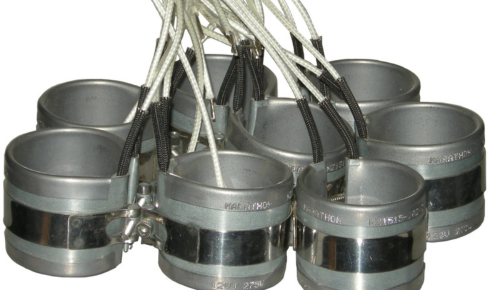
Equipment performance often reveals more than control panels or spec sheets. Subtle production delays, uneven heating, or rising energy use can point to a heater that simply lacks the output required for the job. In many industrial settings, these symptoms trace back to undersized mica band heaters that are working harder than designed yet still falling short.
Heater Fails to Reach Target Temperature Within Expected Time
A properly sized heater should bring a barrel or surface up to temperature within a predictable window. When warm-up times stretch longer than normal, it often indicates that the watt density of the mica band is insufficient for the mass being heated. The heater is producing heat, but not at a rate fast enough to overcome thermal losses. Extended heat-up cycles also affect downstream processes. Operators may compensate by increasing set points or allowing longer startup periods, which masks the root issue. Over time, this inefficiency becomes a hidden cost, especially when comparing actual performance against the expected output associated with the original mica band heater price.
Material Takes Longer than Usual to Melt or Heat Evenly
Delayed material heating is a common production complaint tied to undersized heaters. Polymers, adhesives, or resins may soften unevenly, creating flow inconsistencies or incomplete melting. This often happens when the heater cannot deliver enough energy across the full circumference of the heated surface.
Uneven heat transfer also forces material to absorb heat indirectly, relying on conduction from hotter zones. This delay not only slows cycles but can alter material properties. Mica band heaters are designed for uniform heat distribution, and when sizing is off, that advantage is diminished.
Frequent Cycling on and off Without Maintaining Heat Level
Rapid cycling is a red flag in heating systems. An undersized mica band struggles to maintain temperature, causing controllers to switch power repeatedly in an attempt to stabilize output. Instead of steady heat, the system oscillates between heating and cooling.
This behavior stresses electrical components and reduces control accuracy. While the heater appears active, it never truly settles into equilibrium. Over time, this cycling pattern shortens heater life and undermines process consistency.
Excessive Heat Buildup in Local Areas of the Heater Band
Localized hot spots often develop when a heater is undersized. The band concentrates its output in certain areas while failing to distribute heat evenly across the surface. These hot spots can discolor the heater shell or damage insulation.
What makes this issue difficult to spot is that average temperature readings may still appear acceptable. The problem lies in uneven energy delivery, not total output. In mica band applications, uniform contact and correct wattage are both essential to avoid localized overheating.
Surfaces near the Heater Remain Cooler than Set Points
Cold zones adjacent to the heater indicate insufficient thermal reach. Even with the controller calling for heat, certain areas fail to reach the desired temperature. This often occurs when the heater lacks the capacity to overcome heat loss from air exposure or adjacent components.
Operators may notice temperature gradients along barrels or housings. These variations affect material flow and processing accuracy. Properly sized mica band heaters are designed to maintain consistent surface temperatures, reducing these gradients.
Heater Runs Constantly yet Never Stabilizes at Desired Temp
A heater that runs continuously without reaching set point is a classic sign of undersizing. The unit operates at full output but still cannot supply enough energy to meet demand. This continuous operation increases electrical load and accelerates wear.
Constant operation also skews performance evaluations. The system appears busy, yet productivity suffers. Comparing expected heater performance against actual results often reveals that the initial mica band heater price was optimized for cost rather than application demands.
Increased Strain on Power Supply or Control Systems
Undersized heaters draw power more frequently and for longer durations. This sustained demand places additional strain on power supplies, relays, and temperature controllers. Over time, these components may fail prematurely. Electrical inefficiencies also surface in energy audits. Power usage climbs without a corresponding increase in output. In many cases, upgrading to properly sized mica band heaters reduces total energy consumption despite higher individual watt ratings.
Product Quality Varies Due to Inconsistent Heating Zones
Inconsistent heating directly affects product quality. Variations in temperature can cause dimensional changes, surface defects, or incomplete processing. These issues often appear sporadically, making them difficult to trace back to heater sizing. Quality fluctuations increase scrap rates and rework. Even small temperature deviations can have large downstream effects. Consistent output is one of the primary advantages of well-matched mica band systems, especially in precision manufacturing.
Premature Wear or Failure of the Heater Elements Themselves
Heaters operating beyond their intended load wear out faster. Insulation materials degrade, resistance elements fatigue, and electrical connections loosen. Premature failure is often blamed on manufacturing defects, when undersizing is the real cause.
Replacing heaters repeatedly becomes costly, regardless of the original mica band heater price. Selecting the correct size from the start extends service life and reduces downtime. Proper application matching ensures that mica band heaters operate within safe thermal and electrical limits. Identifying undersized heating equipment requires attention to performance patterns, not just specifications. Thermal Corp helps customers avoid sizing issues by designing and manufacturing mica band heaters specifically matched to each application.