

In this report
What Are the Key Factors to Consider When Selecting a Power Transformer?
Selecting the right power transformer is an important decision for utilities, industrial facilities, commercial buildings, and infrastructure projects across the United States. A transformer must do more than convert voltage levels. It needs to handle the electrical load reliably, operate efficiently, meet safety requirements, and support the facility’s long-term power demands. Choosing the wrong unit…
Selecting the right power transformer is an important decision for utilities, industrial facilities, commercial buildings, and infrastructure projects across the United States. A transformer must do more than convert voltage levels. It needs to handle the electrical load reliably, operate efficiently, meet safety requirements, and support the facility’s long-term power demands. Choosing the wrong unit can lead to unnecessary energy losses, overheating, unexpected downtime, and higher maintenance costs.
As electricity consumption continues to grow due to industrial expansion, data centers, renewable energy projects, and electrification, businesses need to pay closer attention to transformer specifications. Working with experienced Indian transformer manufacturers can also be an option for US buyers evaluating international suppliers, provided the manufacturer can meet the project’s technical requirements, applicable standards, and delivery expectations.
Before purchasing a transformer, it is important to understand the factors that influence its performance, suitability, and operating life. From voltage ratings and load capacity to cooling systems and installation conditions, every specification plays a role in selecting the right equipment.
1. Understand Your Voltage Requirements
Voltage compatibility should be one of the first considerations when selecting a power transformer. Every electrical installation has specific input and output voltage requirements, and the transformer must match the system in which it will operate.
For example, a utility project may require a transformer to step down transmission voltage for distribution, while an industrial facility may need a unit that supplies the voltage levels required by heavy machinery and production equipment.
Buyers should identify the primary voltage, secondary voltage, frequency, and required voltage regulation before finalizing a specification. In the United States, electrical systems generally operate at 60 Hz, so the transformer must be suitable for the intended operating frequency.
It is equally important to consider whether the project may require different voltage configurations in the future. Selecting equipment with appropriate tap-changing provisions can help accommodate variations in supply voltage and changing operating conditions.
2. How Much Load Capacity Does Your Project Require?
Load capacity determines how much electrical power a transformer can handle without operating beyond its design limits. It is generally expressed in kilovolt-amperes (kVA) or megavolt-amperes (MVA), depending on the transformer’s size and application.
When calculating the required capacity, consider the total connected load, maximum demand, power factor, and the operating patterns of connected equipment. Industrial facilities with motors, compressors, furnaces, and other heavy machinery may experience significant variations in electrical demand throughout the day.
For projects involving Power transformers USA, it is particularly important to evaluate both present electricity requirements and expected future demand. Data centers, manufacturing facilities, renewable energy installations, and utility networks may require additional capacity as operations expand.
A transformer that is too small can experience excessive heating and insulation deterioration. However, choosing a significantly oversized unit can increase initial costs and may result in inefficient operation under certain loading conditions. The best approach is to work with electrical engineers to calculate the appropriate rating based on actual load studies and realistic expansion plans.
3. Choose the Right Type of Power Transformer
Power transformers are available in different designs, and the correct choice depends on the intended application. Selecting a suitable design helps ensure that the equipment performs reliably under its expected operating conditions.
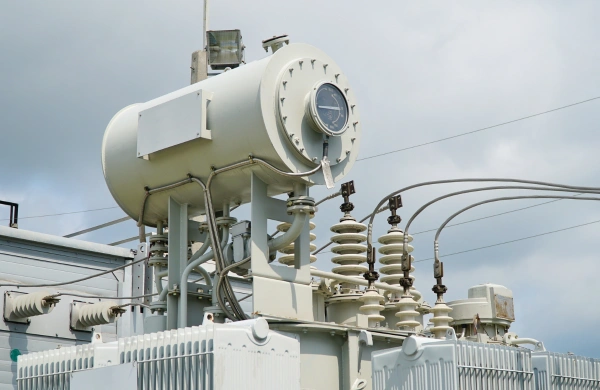
For example, liquid-immersed transformers are commonly used in utility substations and large industrial installations where high power capacity and effective heat dissipation are important. They use insulating liquid to provide electrical insulation and transfer heat away from internal components.
Dry-type transformers, on the other hand, use air or other solid insulation systems rather than insulating oil. They are often considered for indoor installations, commercial buildings, and locations where liquid containment requirements or fire-safety considerations influence equipment selection.
Autotransformers may be suitable for applications requiring voltage adjustment within certain electrical systems, while specialized transformers are designed for applications such as renewable energy integration, rectification, and industrial processes.
The selection should be based on the project’s voltage class, capacity, installation environment, operating conditions, and maintenance requirements rather than simply choosing the most commonly available design.
4. Why Is Transformer Efficiency Important?
Transformer efficiency directly affects the amount of electricity lost during operation. Although transformers are highly efficient electrical devices, even relatively small losses can become significant when equipment operates continuously over many years.
There are two major categories of transformer losses: core losses and winding losses. Core losses occur due to the magnetic properties of the core and are present whenever the transformer is energized. Winding losses are mainly caused by electrical resistance in the conductors and generally increase with the load current.
For large installations, evaluating both types of losses is essential. A transformer with lower losses can reduce long-term electricity expenses, improve energy utilization, and support sustainability objectives.
US buyers should also check the applicable Department of Energy (DOE) efficiency requirements for the specific transformer category. The relevant regulatory requirements depend on equipment classification, manufacturing date, and other technical details. For example, certain updated distribution-transformer efficiency requirements in the federal regulations take effect in April 2029, rather than applying universally to every power transformer today.
Instead of comparing transformers only by their purchase prices, buyers should consider their expected energy consumption and total cost of ownership over the equipment’s operating life.
5. Consider the Cooling System and Temperature Conditions
Heat management is another important factor when selecting a power transformer. Electrical losses generate heat inside the equipment, and excessive temperatures can accelerate insulation ageing and reduce service life.
Different cooling arrangements are available depending on the transformer’s design, rating, and application. Liquid-immersed transformers may use natural oil circulation with natural air cooling or forced cooling arrangements involving fans and pumps. Dry-type transformers generally rely on natural or forced air circulation.
The operating environment also matters. Transformers installed in areas with high ambient temperatures, limited ventilation, dust, humidity, or coastal exposure may require additional design considerations.
Before purchasing, check the proposed cooling arrangement, temperature-rise limits, ventilation requirements, and expected operating conditions. The cooling system should be suitable for the actual installation rather than selected only on the basis of the transformer’s rated capacity.
6. Check Insulation, Impedance, and Short-Circuit Strength
Insulation plays a critical role in protecting transformer windings and other internal components from electrical failure. The insulation system must withstand normal operating voltages as well as temporary overvoltages and electrical stresses that can occur during system disturbances.
Buyers should review the transformer’s insulation level, dielectric test requirements, and basic impulse insulation level (BIL), where applicable. These specifications should match the voltage class and protection requirements of the electrical network.
Impedance is another important specification. It influences voltage regulation and the magnitude of fault current that can pass through a transformer during a short circuit. An unsuitable impedance value can create coordination challenges or affect the performance of connected equipment.
Short-circuit withstand capability is particularly important for utility substations and large industrial systems. Transformers must be designed to withstand the mechanical and thermal stresses associated with specified fault conditions.
For US projects, engineers should confirm the relevant IEEE, ANSI, and other applicable technical requirements for the equipment and installation. Compliance should be supported by appropriate design documentation and test reports.
7. Evaluate Installation Location and Environmental Conditions
The location where a transformer will operate can influence its design, protection requirements, and maintenance needs.
An outdoor substation transformer may face rain, wind, temperature variations, sunlight, and environmental contaminants. Indoor installations may have different limitations involving available floor space, ventilation, access, and fire protection.
In coastal regions, salt exposure and corrosion protection deserve additional attention. In colder climates, low-temperature operation and the properties of insulating liquids may need to be considered. Areas prone to flooding may require suitable elevation, drainage, or other protective measures.
The foundation and available installation space should also be evaluated before equipment delivery. Large transformers may require special transportation arrangements, lifting equipment, and sufficient access for installation and future maintenance.
Considering these factors during the design stage can help prevent costly site modifications and operational problems later.
8. Review Safety Features and Regulatory Compliance
Electrical safety should never be treated as an optional consideration. A properly specified transformer should include suitable protection and monitoring arrangements for its operating environment and application.
Depending on the transformer design, relevant features may include temperature indicators, pressure-relief devices, oil-level indicators, protective relays, and other monitoring equipment. More advanced installations may also incorporate condition-monitoring systems that help operators identify developing problems before they cause unexpected failures.
For projects in the United States, buyers should review applicable IEEE and ANSI standards, National Electrical Code (NEC) requirements for the installation, and relevant local utility specifications. Additional requirements may apply depending on the project location, transformer type, and installation category.
It is also important to check the manufacturer’s quality documentation, inspection procedures, and test certificates before accepting the equipment.
9. Assess the Manufacturer’s Experience and Testing Capabilities
A transformer manufacturer’s experience can have a considerable influence on product quality and project reliability. Buyers should look beyond marketing claims and evaluate the supplier’s technical expertise, manufacturing facilities, quality-control procedures, and experience with similar applications.
Ask whether the manufacturer can provide detailed technical drawings, design specifications, routine test reports, and the required type or special test documentation. Testing should be aligned with the applicable standards and project specifications.
For international buyers, it is also important to evaluate export experience, shipping arrangements, delivery schedules, spare-parts availability, and after-sales technical support.
Transformers & Rectifiers (India) Limited (TARIL), through its website Transformer India, presents a portfolio that includes power transformers, distribution transformers, furnace transformers, rectifier transformers, and other specialized equipment. Its published company information also highlights its international presence and transformer manufacturing experience. These details can be considered when evaluating the company as a potential supplier, while individual project suitability should always be confirmed against the required specifications.
10. Compare Initial Cost with Long-Term Ownership Costs
The purchase price is important, but it should not be the only factor influencing the final decision. A transformer is a long-term investment, and its operating expenses can have a substantial impact on the overall project budget.
Consider the cost of installation, transportation, energy losses, routine maintenance, replacement parts, and potential downtime. A lower-priced transformer may become more expensive over time if it has higher operating losses or requires frequent maintenance.
Buyers should also review the manufacturer’s warranty terms, expected delivery timeline, technical support arrangements, and availability of replacement components.
A detailed comparison of total ownership costs helps businesses select equipment that offers dependable performance and long-term financial value.
Conclusion
Selecting the right power transformer requires careful consideration of electrical requirements, load capacity, efficiency, cooling arrangements, insulation, safety, and installation conditions. Every project has different operating requirements, so the transformer should be selected according to its intended application rather than relying on general specifications.
For US utilities, industrial operators, and infrastructure developers, working with an experienced manufacturer can make the selection process more straightforward. Reviewing technical capabilities, quality certifications, testing procedures, and after-sales support helps buyers make informed decisions and invest in equipment that supports reliable electricity distribution for years to come.
Transformers & Rectifiers (India) Limited (TARIL) offers a range of transformer solutions for utility, industrial, and specialized applications. Visit Transformer India to explore its products and manufacturing capabilities.
Frequently Asked Questions
1. What is the most important factor when selecting a power transformer?
The most important factor is matching the transformer to the electrical system’s requirements. Voltage ratings, load capacity, frequency, application, and operating conditions must all be considered to ensure safe and reliable performance.
2. How do I calculate the required transformer capacity?
Transformer capacity is calculated by evaluating the total electrical load, maximum demand, power factor, and expected future expansion. Electrical engineers typically use load studies to determine the appropriate kVA or MVA rating.
3. Which is better: a dry-type or liquid-immersed transformer?
Neither option is universally better. Dry-type transformers are often suitable for indoor installations where liquid insulation is undesirable, while liquid-immersed transformers are commonly used in utility and large industrial applications requiring higher capacities and effective cooling.
4. Which standards should a power transformer meet in the USA?
Depending on its application and classification, a transformer may need to comply with applicable IEEE, ANSI, NEMA, and DOE requirements. Installation requirements under the National Electrical Code and local utility specifications should also be reviewed.
5. How long does a power transformer typically last?
A power transformer’s service life depends on its design, loading conditions, insulation quality, operating temperature, maintenance practices, and environmental conditions. With appropriate operation and maintenance, many power transformers can remain in service for several decades.

 Business
How Indian Transformer Manufacturers Are Supporting Global Energy Projects
The global energy sector is changing faster than ever. Countries are investing heavily in renewable energy, modern transmission…
 Business
How to Scale a Multi-Marketplace Reselling Business Without Losing Control
Once you start selling the same type of inventory on more than one marketplace, the opportunity is obvious.…
 Business
Melbourne Interstate Removalists: Practical Tips for a Stress-Free Interstate Relocation
Moving from Melbourne to another Australian state involves more than arranging transportation. You need to coordinate your packing,…